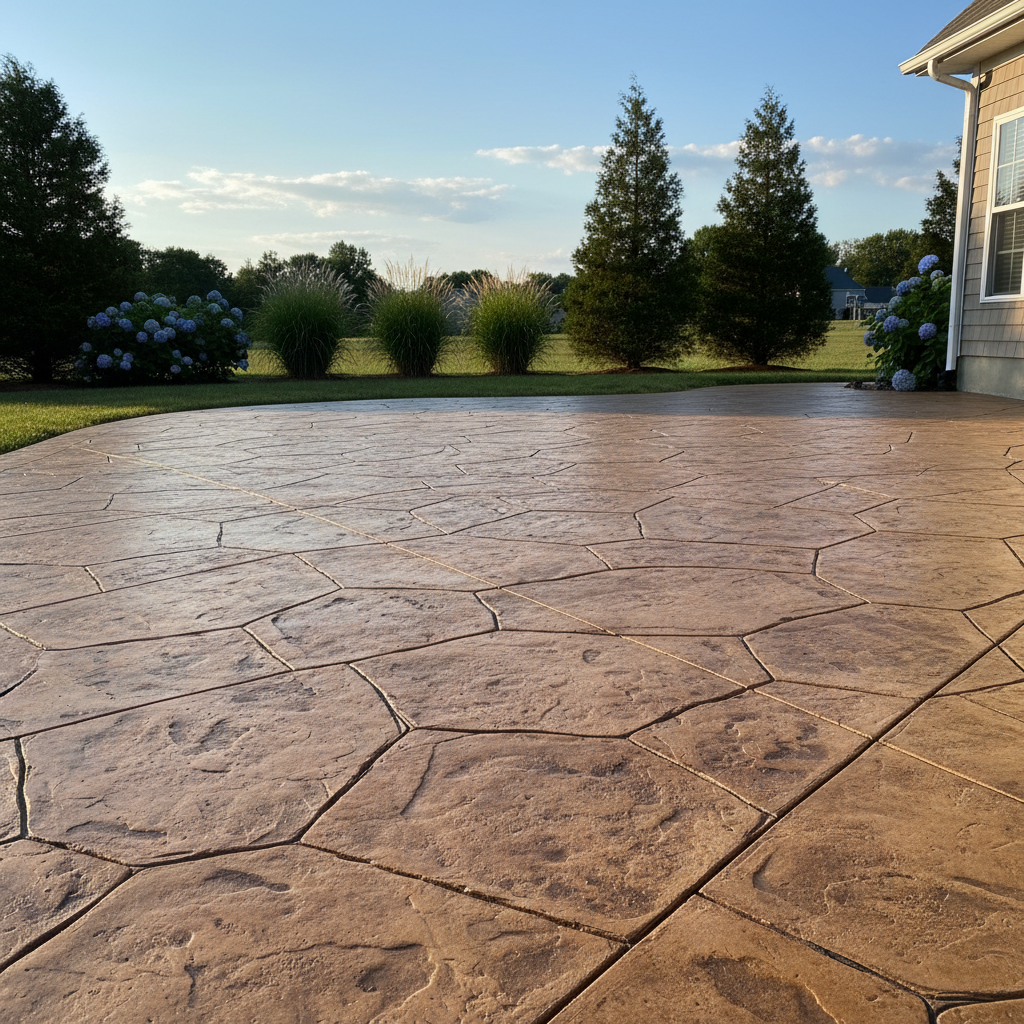
What's the real difference between stamped concrete and regular concrete?
Okay, so this is probably the most common question I get when folks are thinking about a new patio. Regular concrete, often called broom-finished, is pretty straightforward. We pour it, level it, and then give it a textured, non-slip finish with a broom. It's durable, cost-effective, and gets the job done. Think of it as the workhorse of patios.
Stamped concrete, on the other hand, is all about aesthetics. While the concrete is still wet, we use special mats to press patterns and textures into it, making it look like natural stone, brick, wood, or even slate. Then we add color, either integrally mixed into the concrete or applied on top. It gives you a high-end look without the high-end price tag of actual flagstone or pavers. It's more labor-intensive, so it costs more, but the visual impact is huge. For homes around the Port-au-Peck area, where you see a lot of varied architectural styles, stamped concrete can really blend in beautifully or make a statement.
How long does a concrete patio actually last in our New Jersey weather?
A well-installed concrete patio, especially one done right by a crew like ENJ Concrete Construction, should easily last 25 to 30 years, sometimes even longer. The key is proper preparation and installation. That means good sub-base compaction, the right concrete mix for our climate – which includes air-entrainment to handle our freeze-thaw cycles – and proper curing. We get some pretty brutal winters and hot, humid summers here in Oceanport, so you can't cut corners. If someone skimps on the base or uses a cheap mix, you'll see cracks and spalling a lot sooner. But with quality work, it's a very long-lasting solution.
Do I need to seal my concrete patio? How often?
Absolutely, yes, you need to seal it. Think of sealer as sunscreen for your patio. It protects the concrete from moisture penetration, stains, UV rays, and those harsh freeze-thaw cycles we just talked about. For a regular broom-finished patio, I usually recommend sealing it every 2-3 years. If you've got a stamped or colored patio, it's even more critical, and you might want to do it every 1-2 years, especially if it gets a lot of sun or heavy use. It's not a difficult job to do yourself, or you can have us come out and do it for you. It's a small investment that makes a big difference in your patio's longevity and appearance.
What causes cracks in concrete, and are they always a problem?
Cracks are almost inevitable in concrete; it's just the nature of the material. Concrete shrinks as it dries and cures, and that movement can cause stress. That's why we put in control joints – those lines you see cut into the concrete. They're designed to give the concrete a place to crack in a controlled, less noticeable way. Most hairline cracks along these joints, or even small surface cracks, aren't structural problems. They're just cosmetic.
However, wide cracks (say, over a quarter-inch), cracks that are uneven (one side higher than the other), or cracks that spiderweb extensively could indicate a bigger issue, like an unstable sub-base or improper concrete mix. If you see those, it's worth having a professional take a look. But a few small cracks? Don't lose sleep over them.
Can I pour a concrete patio directly over my existing pavers or old concrete?
Generally, no, and I wouldn't recommend it. While it might seem like a shortcut, pouring new concrete directly over old pavers or a damaged concrete slab usually leads to problems down the road. The old surface might not be stable, it could have drainage issues, or it might transfer its existing cracks right up into your new patio. You're effectively building on a bad foundation.
For the best results, we always recommend removing the old material, properly preparing and compacting the sub-base, and then pouring fresh concrete. It's more work upfront, but it ensures a stable, long-lasting patio that you won't have to worry about settling or cracking prematurely. You want a clean slate to build on.
How long does it take from start to finish to install a new concrete patio?
The timeline can vary a bit depending on the size and complexity of the patio, but here's a general breakdown. For a typical residential patio, say 200-400 square feet:
- Preparation: This includes excavation, grading, and compacting the sub-base. That usually takes 1-2 days.
- Formwork and Reinforcement: Setting up the forms and laying down rebar or wire mesh. Another 1 day.
- Pouring and Finishing: This is the big day. For a broom-finished patio, it's usually done in a single day. Stamped concrete takes a bit longer because of the stamping and coloring process, sometimes stretching into a second day for detailed work.
- Curing: This is the most important part, and it's mostly hands-off for you. You can typically walk on it lightly after 24-48 hours, but you'll want to keep heavy furniture or vehicles off it for at least 7 days, and ideally, wait 28 days for it to reach its full strength. We'll usually apply a curing compound to help with this.
- Sealing: If we're sealing it right away, that'll be done after the initial cure, maybe a week or two after the pour.
So, from breaking ground to being able to lightly use it, you're looking at about 3-5 days of active work, plus that crucial curing time. It's not an instant gratification thing, but it's worth the wait for a solid, beautiful patio.