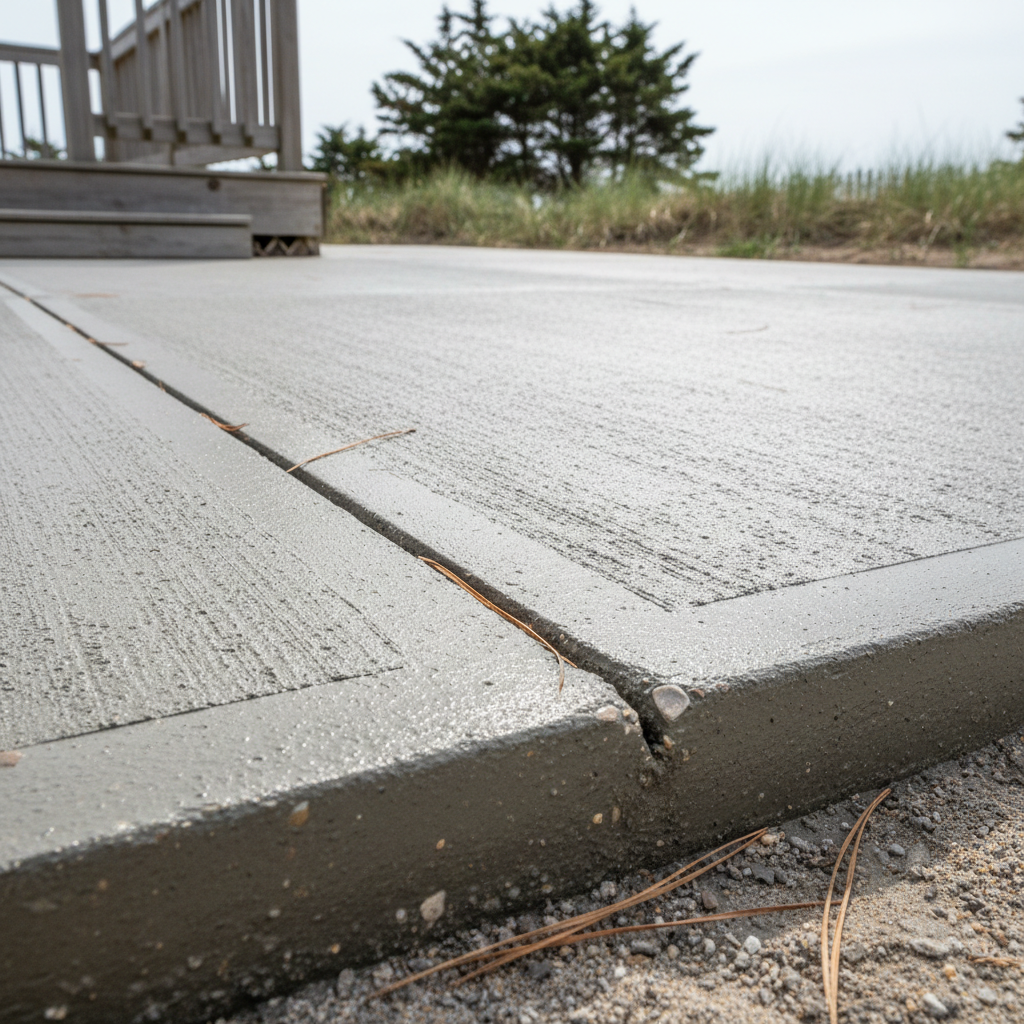
So, you're thinking about pouring some concrete around your place here in Oceanport. Maybe it's a small patio, a new walkway, or a repair job. It's a common thought for homeowners. Concrete looks simple enough, right? Mix, pour, smooth. But there's a lot more to it than that, and knowing when to DIY and when to call a pro can save you a ton of headaches, time, and money.
Before You Even Think About Mixing
First off, let's get real about what you're trying to do. A small, non-structural slab, like a pad for your garbage cans or a stepping stone path, might be a good DIY project. We're talking something that's not going to bear much weight or see heavy traffic. Anything bigger, or anything that needs to be perfectly level, drain correctly, or support a structure – like a driveway, a foundation, or a large patio – that's usually where you want to pause and consider a professional.
You've got to think about permits too. Depending on the size and type of concrete work, especially if it's connected to your house or impacts drainage, you might need a permit from the Oceanport borough. Don't skip this. It's not just a formality; it ensures the work meets local codes and won't cause issues down the road. Trust me, I've seen folks try to bypass this, and it always ends up costing more in the long run.
Then there's the planning. You need to know your exact dimensions, how thick the concrete needs to be, and what kind of base you'll need. Here in Oceanport, with our sandy-loam soils, proper compaction and a good gravel base are crucial for preventing settling and cracking. You'll also need to consider drainage – where's the water going to go? You don't want it pooling against your house or running into your neighbor's yard.
During the Pour: It's a Race Against Time
Okay, let's say you've decided your project is DIY-friendly. You've got your forms built, your base prepped, and you're ready for the concrete. This is where things get fast. Concrete doesn't wait for you. Once it's mixed, you've got a limited window – usually an hour or two, depending on the mix and the weather – to get it poured, leveled, and floated.
- Tools: Do you have a concrete mixer (for small batches), wheelbarrows, shovels, screeds, floats, and edgers? Renting these can add up quickly.
- Strength in Numbers: Even for a small slab, it's not a one-person job. You'll need at least one or two extra sets of hands to help mix, pour, and spread the concrete before it starts to set.
- Leveling: Getting a perfectly level or correctly sloped surface is harder than it looks. A good screed board and a lot of patience are key.
- Finishing: This is where the art comes in. Floating and troweling give you that smooth, durable surface. Mess this up, and your concrete will look rough, uneven, and might not last as long.
For anything more than a few square feet, especially if you're getting a concrete truck delivery, I really recommend calling in a professional. We've got the equipment, the crew, and the experience to get it done right, quickly, and efficiently. At ENJ Concrete Construction, we do this every day, so we know how to handle the unexpected and ensure a quality finish.
After the Pour: Patience is a Virtue
So you've successfully poured and finished your concrete. Great! But the work isn't over. Curing is just as important as the pour itself. Concrete doesn't just dry; it cures, which is a chemical process that strengthens it. If it dries out too fast, it'll be weak and prone to cracking.
- Keep it Moist: For at least the first 3-7 days, you need to keep the concrete damp. You can do this by misting it with water, covering it with plastic sheeting, or using a curing compound. This is especially important during our hot, humid Oceanport summers.
- Stay Off It: Don't put heavy weight on your new concrete too soon. You can usually walk on it after 24-48 hours, but wait at least 7 days before driving on it or placing heavy items. Full strength isn't reached for about 28 days.
- Seal It: Once your concrete is fully cured, consider applying a good quality sealer. This will protect it from stains, moisture, and general wear and tear, making it last longer and look better.
Look, I'm all for homeowners tackling projects themselves. It's satisfying. But with concrete, the margin for error is pretty small, and mistakes are hard, if not impossible, to fix without tearing it out and starting over. For most significant concrete projects, especially anything that needs to look good and last for decades, calling a local pro like ENJ Concrete Construction is usually the smartest move. We'll get it done right the first time, saving you the headache and the backache.