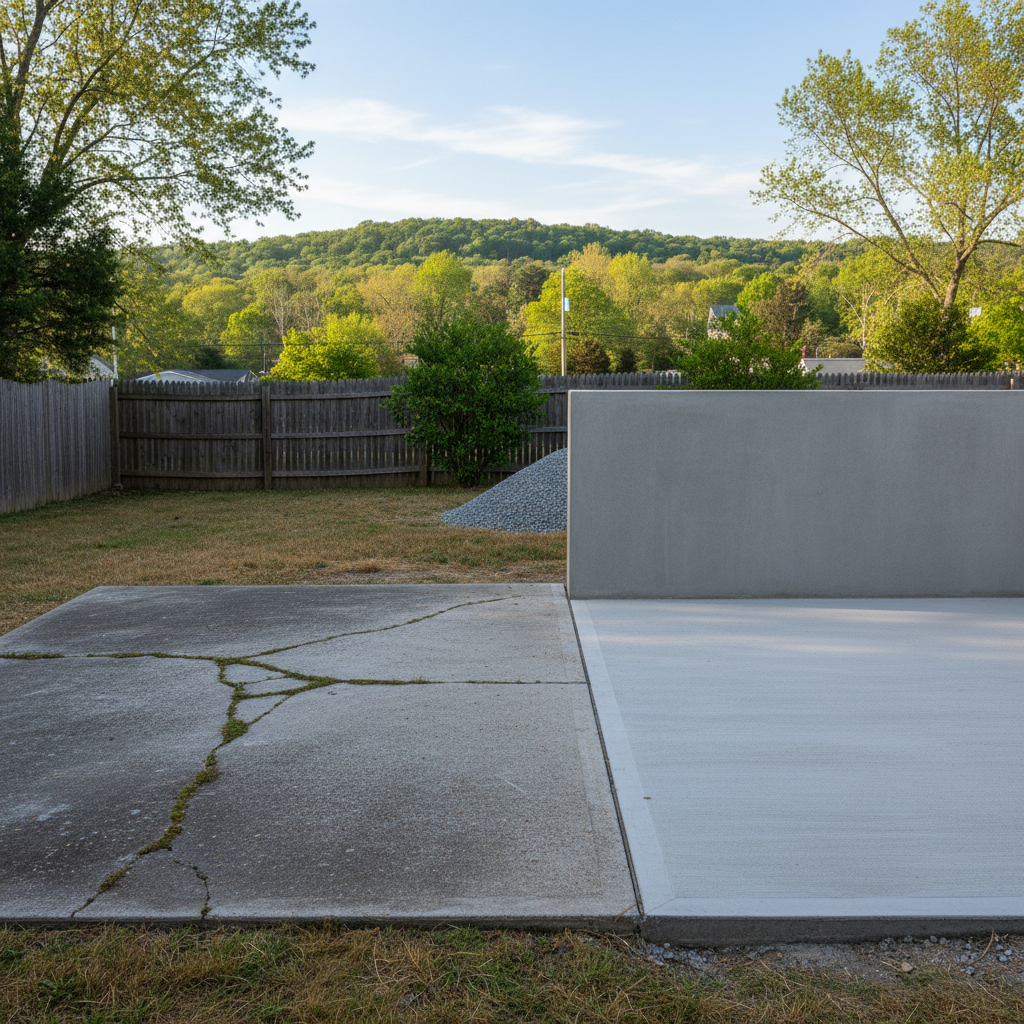
Choosing how to build your home base is an important decision. If you are building or adding an addition around Oceanport, you have probably hit the debate between poured concrete and concrete masonry units, which are usually called cinder blocks. ENJ Concrete Construction has spent years working on local job sites across Monmouth County. The choice you make matters more than just the upfront price tag.
We will look at how these two methods stack up against each other when dealing with local conditions, starting with the sandy loam soils and high water tables we often deal with near the coast.
Strength and Durability Under Pressure
When it comes to raw structural strength, poured concrete walls win. A poured wall is a solid, monolithic sheet of concrete reinforced with steel rebar. Because there are no joints, it handles lateral soil pressure much better than stacked blocks. If you have saturated soil pushing against your foundation after a heavy coastal nor'easter, a solid poured wall resists bowing and cracking far more effectively.
Concrete block foundations, on the other hand, are built piece by piece with mortar joints. Over time, those mortar joints can degrade, especially if moisture finds a way in and goes through freeze-thaw cycles. That does not mean blocks are useless. They have been used successfully for decades. However, they require thorough waterproofing and steel reinforcement inside the cores to match the integrity of a solid pour.
Upfront Costs vs. Long-Term Maintenance
Budget is usually where homeowners start worrying. Concrete block foundations generally have a lower material and labor cost upfront because you do not need heavy wooden forms or specialized concrete pump trucks. If you are working with a tighter budget, block installation can look attractive on paper.
However, you have to look at the maintenance side of things. Block walls have hundreds of feet of mortar joints, which means hundreds of potential points for water seepage. If water gets into the hollow cores of those blocks, you are facing damp basements and potential wall failure down the road. Poured walls are not entirely immune to hairline cracks from normal settling, but they are easier to waterproof from the outside and keep bone-dry.
ENJ Concrete Construction always tells homeowners to weigh initial savings against what they might spend on interior drainage systems or wall repairs ten years down the line.
The Oceanport Factor: Soil and Water
Here in Oceanport, you cannot ignore the environment. Our proximity to the water means high humidity and water tables that can fluctuate wildly depending on the season. Sandy soils drain fast, but heavy rain can still create intense hydrostatic pressure against a basement wall.
Poured concrete acts as a tighter barrier against moisture infiltration. Blocks can work well if you install a complete exterior membrane and proper French drains, but any shortcuts during the block-laying process will come back to cause problems when the groundwater rises.
Which One Should You Choose?
If you want the strongest, most watertight foundation that will stand up to shifting soils and require the least amount of future maintenance, go with poured concrete. ENJ Concrete Construction installs poured concrete foundations for homes in Oceanport, NJ.
If a block foundation is your only option due to specific site access constraints or unique structural engineering requirements, make sure your contractor is reinforcing every single core and investing in rigorous waterproofing. Cut corners here, and you will pay for it later.